(1659) MD 1S Lord Baltimore MS(PCGS#34)
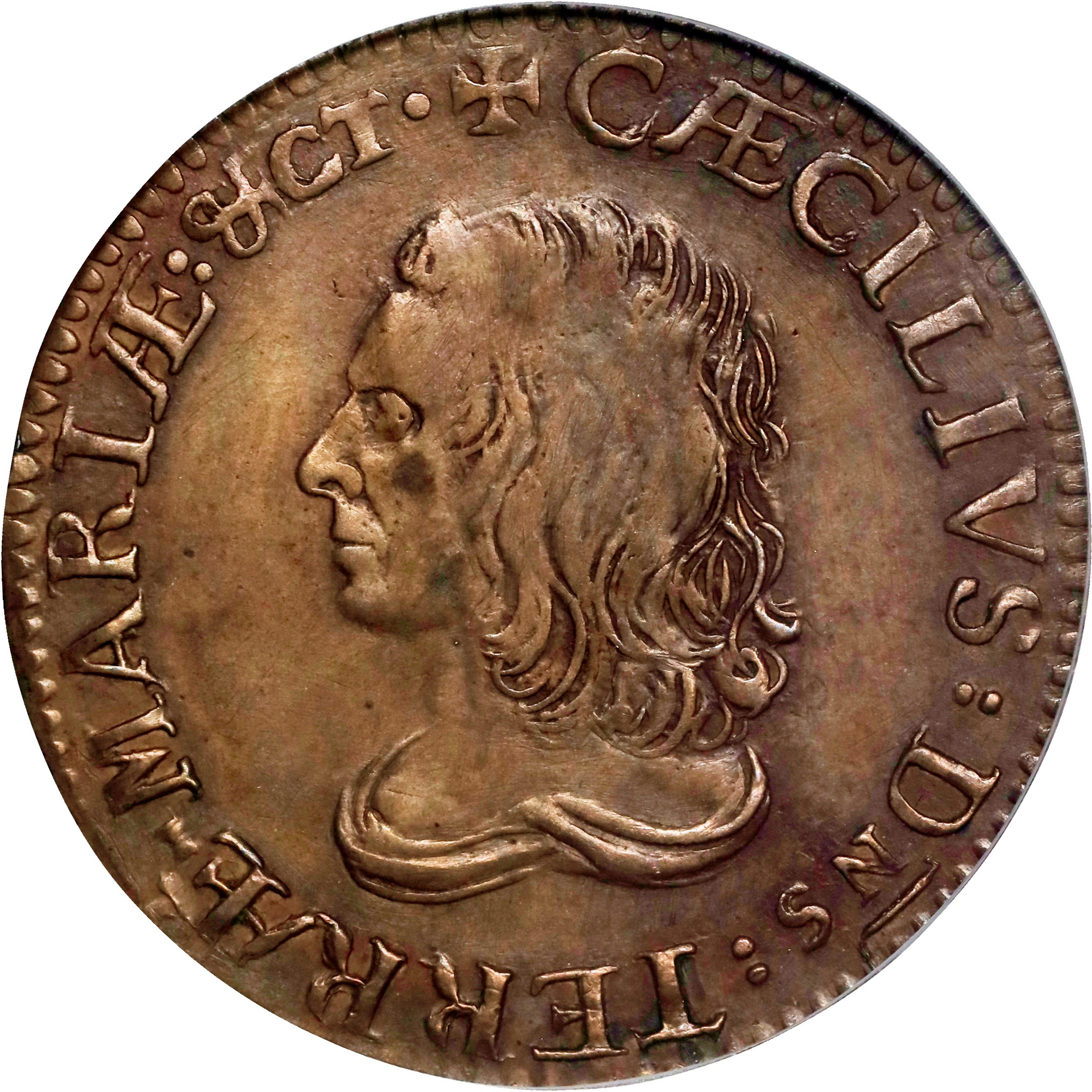
(1659) MD 1S Lord Baltimore MS (PCGS#34)
Summer 2026 Global Showcase Auction U.S. Coins
- Auctioneer
- Stack's Bowers
- Lot Number
- 1307
- Grade
- AU50
- Price
- 19,520
- Lot Description
- A very nice survivor of this important issue, the first silver coin produced abroad exclusively for American circulation. Well struck in general, although we do note typical softness to the detail on Calvert's head and in the opposing area on the reverse, within the shield. Both sides are uncommonly well centered for the type and, although some of the border denticulation is beyond the flan, all peripheral motifs are complete. Overall detail is suitably bold for the assigned grade, in fact, and there are no sizeable marks to distract during in-hand viewing. The surfaces are a bit muted beneath blended russet and mauve-gray color, the combination of these two attributes suggesting retoning over an old, light cleaning. Close inspection with a loupe reveals faint pin scratches over and around Calvert's portrait and along the right obverse border that are also mentioned for accuracy. With PCGS having certified only one Mint State coin, and AU examples elusive regardless of overall quality, this piece is uncommonly strong both technically and aesthetically for this challenging colonial era type.<p>The terms of Calvert's grant called for him to be guaranteed all rights enjoyed by the Bishop of Durham, who had issued coins in his own name during the Middle Ages. Thus, Calvert had shillings, sixpences, groats (four pence), and copper pennies (or denariums) coined bearing his bust and Arms, and passed local ordinances in Maryland calling for their mandatory circulation. He ran afoul of British authorities, who frowned on him exporting silver from the mother country no matter what the terms of his claim may have been. Despite his legal troubles, coins of every denomination reached Maryland and began circulating there in the early 1660s. Today, most survivors of this denomination are in poor condition, often holed and plugged after use in jewelry, badly polished, well-worn, or a combination of the above. While sixpence often survive in decent grade, thanks in part to a hoard of about 20 pieces located in England two decades ago, the shillings rarely fared so well. While a few high grade pieces exist, more than one of them shows what may be charitably called negative eye appeal. This pleasing PCGS AU-50 is an exception, ranking among the nicer-looking examples from the Hodder 1-A dies that we have ever had the privilege of bringing to auction.