1869 $20 MS(PCGS#8955)
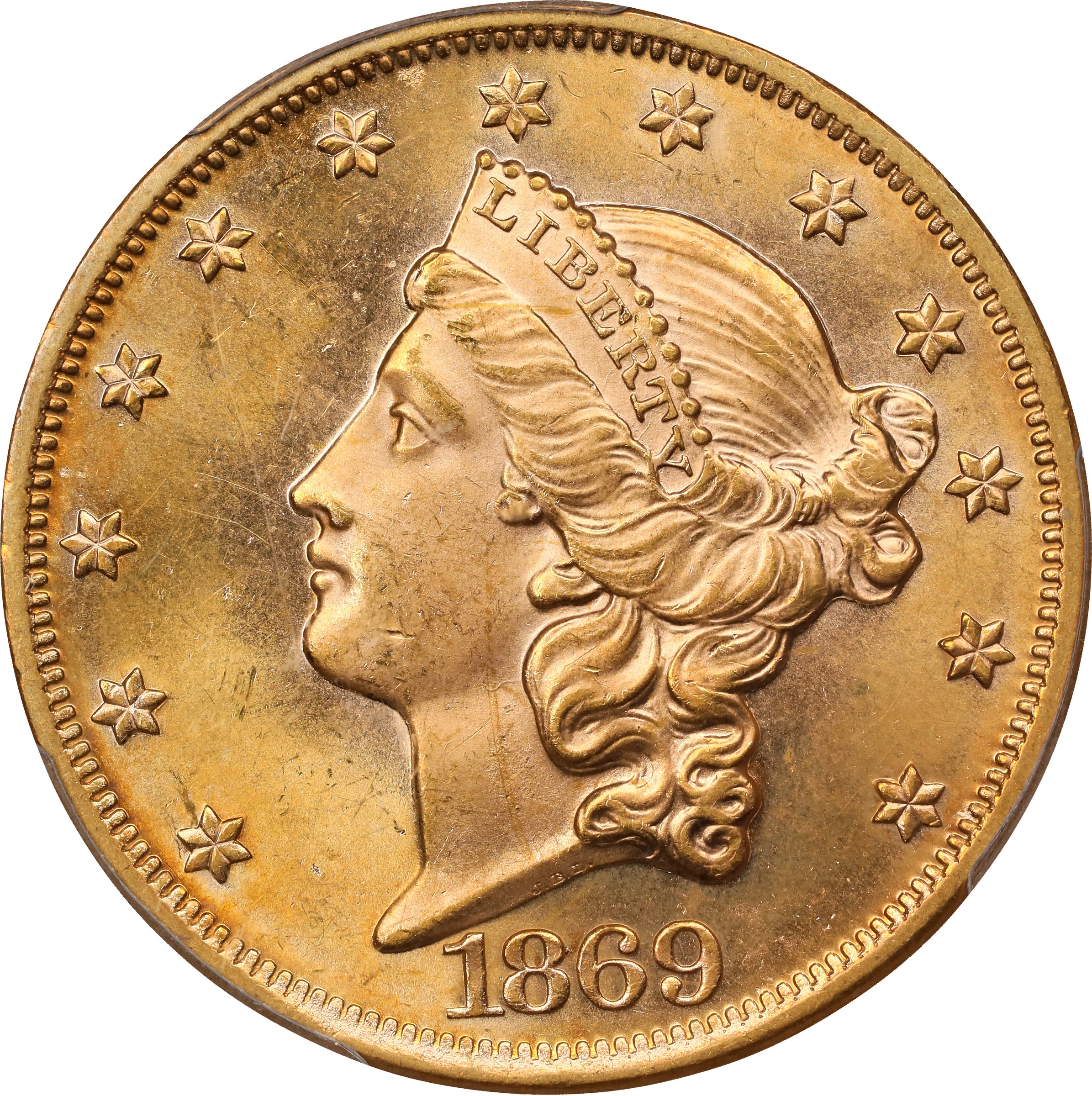
1869 $20 MS (PCGS#8955)
Summer 2026 Global Showcase Auction U.S. Coins
- 경매인
- Stack's Bowers
- 로트 번호
- 2504
- 등급
- MS64+
- 가격
- 146,400
- 로트 설명
- An old friend of our firm, we last offered this amazing condition rarity Type II double eagle in our (Bowers and Merena's) May 2000 Bass III sale, in which it was described, in part, as:<p><em>This is an exceptional example with reflective, prooflike fields and considerable cameo contrast. Faint bluish patina is visible in the lower left obverse field. Very sharply struck with nearly flawless surfaces. A few minor hairlines ae present in the obverse fields, and a few minute abrasions are seen on the reverse.</em><p>Neither the hairlines nor mentioned abrasions are visible during in-hand viewing, none are distracting in the slightest, and they serve only to preclude an MS-65 grade for what is otherwise a Gem Mint State coin. A tiny mark near the back of Liberty's chin is the only useful identifier for provenance purposes. Both the quality and eye appeal are outstanding.<p>The Type II double eagle as a whole is among the most challenging issues to obtain in high grade. The Type I double eagle is available in Uncirculated thanks in part to treasure recovered from ships like the SS <em>Republic</em>, SS <em>Brother Jonathan</em>, and most notably the SS <em>Central America</em>. Even Type III issues can be found in moderately higher grades courtesy of repatriations of large quantities from overseas as well as efforts by well-positioned and well-heeled numismatists. This is not the case with the Type II double eagle where high degrees of preservation is much more rarefied and more by chance.<p>The 1869 double eagle is no exception. In that year, 175,130 double eagles were struck at Philadelphia with an additional 686,750 at the San Francisco Mint. While many San Francisco-produced double eagles entered the channels of commerce, those coined in Philadelphia tended to be obtained by large banks or other trading firms who used them for international commerce, shipping them in large quantities overseas. Those that remained in circulation domestically experienced the typical rigors of commercial use and are generally found in EF to AU. Large quantities of the issue ended up in the Treasury's melting pots during the great meltings of the 1930s, leaving even fewer behind. After the Second World War, some of the coins that were shipped overseas found their way back to the United States, but only a few turned out to be in Mint State, almost exclusively between MS-60 and MS-62. Above that level and this issue is a major condition rarity.<p>In the early 1980s in his landmark guide to gold coins, David W. Akers wrote that he was able to locate only seven auction listings of Uncirculated pieces in a survey of more than 400 major auction sales. The situation had not much improved by the time Q. David Bowers wrote his <em>Guide Book of Double Eagle Gold Coins</em> in 2004, in which he estimated a Mint State population somewhere between 15 to 20 different examples. Today's population reports and census figures allow a clear look at the grade landscape and it confirms what has been suspected for many years: the 1869 is exceptionally rare above Select Mint State. NGC reports no grading events above MS-63, while PCGS notes only four coins above MS-63. Standing at the very top is the Pogue coin in MS-66 which, interestingly does not appear in the current online version of the <em>PCGS Population Report</em>. Following close behind is the CC#2 or 3 Bass coin in PCGS/CAC MS-64+ offered here. Not only is it one of the very finest Mint State 1869 doubles eagles, but a total PCGS population of 11 in MS-64+ and seven finer confirms that it is also one of the very finest Mint State Type II double eagles of all issues. A "wonder coin" that will sell for a strong premium to a discerning collector.