1796 50C O-101 MS(PCGS#39261)
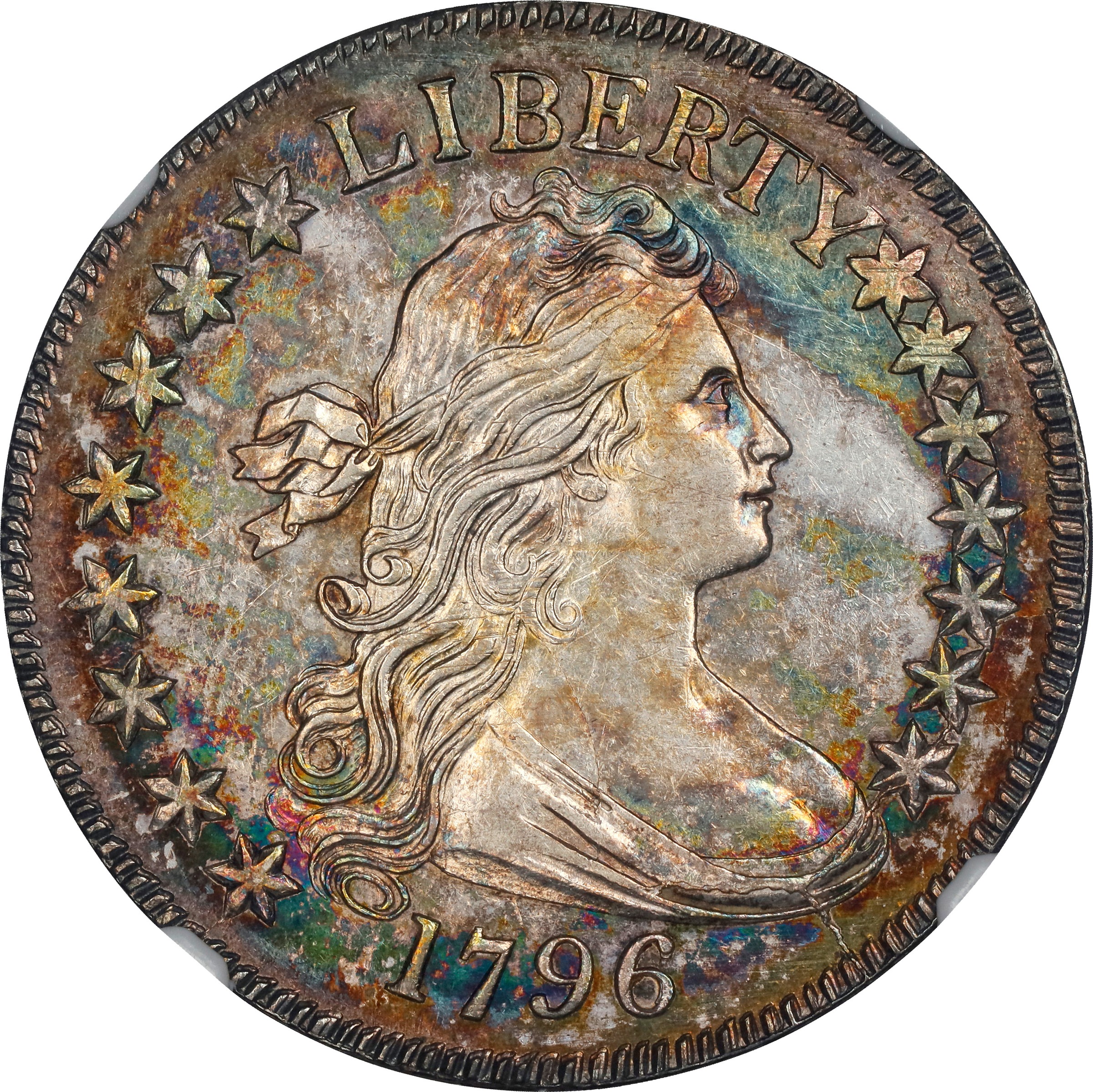
1796 50C O-101 MS (PCGS#39261)
Summer 2026 Global Showcase Auction U.S. Coins
- Auctioneer
- Stack's Bowers
- Lot Number
- 2085
- Grade
- MS62
- Price
- 317,200
- Lot Description
- Amato-Unlisted. Tompkins Die Stage 5/4. An exciting example of this rare and challenging design type in the early U.S. half dollar series. Both sides are dressed in exceptional album toning comprised of mottled reddish-russet, olive-copper, cobalt blue and champagne-pink iridescence that leaves areas of silvery near-brilliance in and around the centers. Strong, universally frosty to semi-reflective luster shines powerfully through the toning as the coin rotates under direct lighting. The strike is ideally centered, the borders fully denticulated, the design elements boldly to sharply defined in most areas. The only mentionable softness is confined to the eagle's head, breast and left leg on the reverse; a few horizontal adjustments marks (as made) are evident on the eagle's breast and within Liberty's hair behind the cheek and neck, a few of which extend right toward the chin. Faint hairlining and a touch of glossiness to the texture point to light numismatic handling during an earlier era, although these features are well within the technical boundaries of the MS-62 grade assigned by NGC. The eye appeal is outstanding for both the grade and type.<p>The half dollars that the United States Mint delivered in 1797 differed from the previous issues for this denomination from 1794 and 1795. In late 1796 Mint personnel adopted Robert Scot's Draped Bust, Small Eagle design that had already been used in the production of 1795-dated silver dollars for use on the half dollar. The delivery of 1797 amounted to a mere 3,918 pieces, 1,934 or so examples having been struck from one of two 1796-dated obverse dies. Surprisingly for a denomination that otherwise proved extremely popular with contemporary bullion depositors, no more half dollars were ordered until 1801, at which time the Heraldic Eagle variant of the Draped Bust type became current. (In the interim the Mint operated on a virtual dollars-only policy to meet the needs of merchants and other major bullion depositors who needed those large-size coins for use in both the export trade and domestic banking.) The Draped Bust, Small Eagle half dollar, therefore, became an instant numismatic rarity - a two-year design type with a combined mintage of just 3,918 pieces. Survivors of both the 1796 and 1797 dates are scarce to rare in all grades, and they never fail to cause a stir among advanced collectors whenever the coins make an appearance at auction.<p>The 1796-dated half dollar delivery was achieved through the use of two obverse dies and a single reverse die in two marriages. Overton-101, offered here, is easy to distinguish from O-102 as the former variety exhibits only 15 stars around the obverse border. There are fewer than 100 different examples of the O-101 die marriage believed extant. This rare Mint State survivor formerly from the Eric P. Newman Collection is not listed in the otherwise extremely comprehensive census of Draped Bust, Small Eagle half dollars compiled by the late Jon P. Amato published in his 2012 reference <em>The Draped Bust Half Dollars of 1796-1797: Numismatic Background and Census</em>.