1849 $5 Oregon Exchange Co. MS(PCGS#10288)
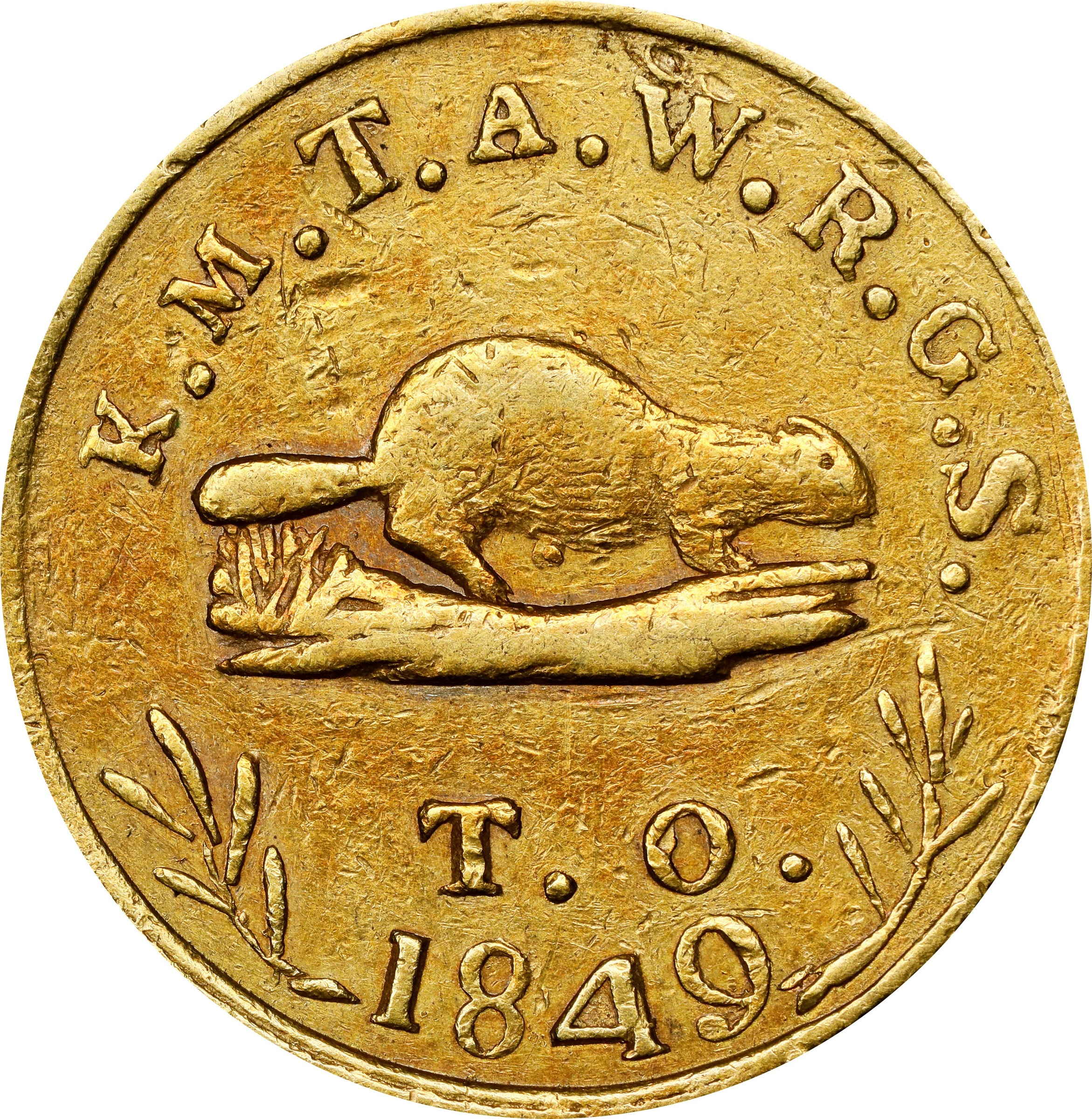
1849 $5 Oregon Exchange Co. MS (PCGS#10288)
February 2026 Showcase Auction - The James A. Stack, Sr. Collection Part II
- Auctioneer
- Stack's Bowers
- Lot Number
- 23068
- Grade
- XF45
- Price
- 156,000
- Lot Description
- One of the most widely coveted rarities of the territorial gold coin series, almost never seen in choice condition in any grade. Medium yellow gold with superlative originality, showing glimpses of rosy toning and pastel highlights around the design elements. Bold and well struck, with a fully realized beaver that shows a good deal of internal detail, including delineated hair throughout its midsection and neck. The reverse is ideally centered, the obverse aligned trivially to 3 o'clock, indicating the reverse was fixed and the obverse was likely a handheld hammer die. Scattered marks are seen, typical of the issue, but none seem obtrusively large or distracting. We note a binary pair above W atop the obverse, a dull mark below the period between M and T, and a diagonal nicks above OL of GOLD on the central reverse. The surfaces show no significant hairlines or scratches, just the appealing surfaces of a circulated coin that served its intended function. <p><p>Many Oregonians who traveled to California to seek their fortune in the gold fields returned home bringing with them quantities of nuggets and gold dust. As with their neighbors in California, local money was in short supply and use of gold dust as a medium of exchange was fraught with difficulties. To address this issue, the Oregon Exchange Company was established by several prominent Oregon City residents in early 1849. The obverse of the five dollar coins bears a rustic depiction of a beaver on a log and the initials of the company officers who contributed to the purchase of the coining equipment: Kilborn, Magruder, Taylor, Abernethy, Willson, Rector, Campbell (which was erroneously entered as a G), and Smith. The T. O. - another die engraver error - represents Oregon Territory. This transposition was corrected on the $10 denomination. William Kilborn, the first named, was the highest profile of the founders, serving as treasurer of the Oregon Territory's provisional government.<p><p>While no effort was made to standardize the alloy, the coiners compensated for this by deliberating making the coins overweight. U. S. Mint assays report that the five dollar coins were valued at $5.50. This helped to guarantee their acceptance, but being worth more than their stated value ensured that the pieces would be taken in at face and melted down for their intrinsic value. It has been estimated that roughly 6,000 of the $5 coins were produced before minting operations ceased in September 1849 when their two crucibles broke and the company decided to disband. "Beaver Money," as the coins were soon nicknamed proved popular in commerce as evidenced by the wide range of grades seen on modern survivors.<p><p>Kagin and McCarthy suggest that 40 to 50 examples of this denomination exist, most in VF and EF grades. Planchet flaws and pits are common, and striking quality ranges significantly. Damage is not uncommon, and many of these coins have survived exclusively from their use in jewelry. We've offered 10 of these over the last 20 years, ranging in grade from Fine (at $43,200 in April 2024) to Mint State (a PCGS MS-62 at $336,000 in August 2020). In his 50 years in the coin business, B. Max Mehl appears to have sold seven. This was the last one he ever cataloged, more than 20 years after his first in the 1925 Judge Charles Slack sale. Acquired by Mr. Stack in 1948, by which time he had already acquired nearly ever pioneer gold coin on his want list, this Beaver $5 has not been offered publicly since.