(1800) AR Medal Washington Funeral Skull & Crossbones MS(PCGS#412255)
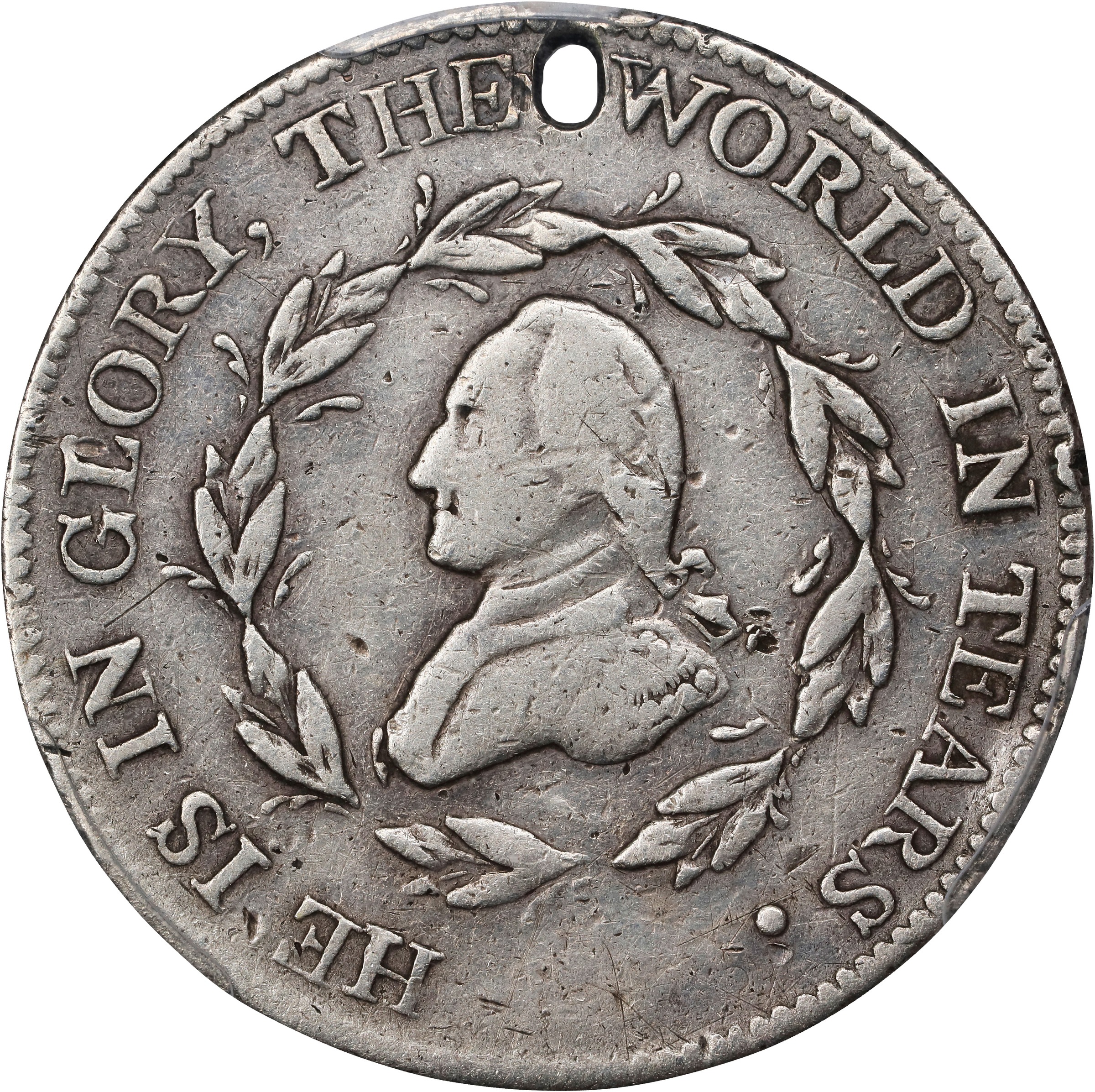
(1800) AR Medal Washington Funeral Skull & Crossbones MS (PCGS#412255)
Summer 2026 Global Showcase Auction U.S. Coins
- Auctioneer
- Stack's Bowers
- Lot Number
- 1145
- Grade
- VF25
- Price
- 18,300
- Lot Description
- 29.0 mm. Neatly pierced for suspension just past 12 o'clock, as typical. A classic rarity and among the most historic of all Washington medals, as it is among the handful that can be assigned a direct place, time and historic purpose. Both sides are light silver gray with scattered marks and a somewhat glossy texture. Clearly this medal was worn and probably also carried lovingly for many years, in fulfillment of its intended purpose. There are no singularly mentionable blemishes, however, and a bit of light toning has gathered in the protected areas around the design elements. Moderate wear throughout, yet with all major design elements bold and fully appreciable.<p>While the more typically seen Funeral Urn medals and the rare oval shells in gold were clearly sold to the public at large, the Skull and Crossbones type was for a more limited, specific audience, and for adornment during a singular momentous occasion. As with the Urn medals and gold shells, these were produced by Jacob Perkins. He was a member of the Masonic Brotherhood, and this type was expressly for the Masonic funeral procession in Boston. While it was reported that some 1,600 participants convened for the Masonic procession, the rarity of this medal today renders it unthinkable that any number approaching that would have been produced. Most likely, Perkins would have made as many as he thought he could reasonably sell to fellow local Masonic brothers in advance of their convergence upon Boston for the February 11 event.<p>An announcement of the planned Masonic procession in Boston appeared in newspapers in that city as well those in the New England communities of Salem, Newburyport, Portland, Worcester, Springfield, Northampton, Stockbridge, Leominster and Dedham, for several days in order to gather the Masonic Brotherhood to publicly honor Washington's memory. The event seems to have been initially reported as planned for February 22 in some publications, and later corrected to February 11. Boston's <em>Russell's Gazette</em> advertised in their January 16 edition that the event would be on the 22nd of February, while a very similar notice appeared in Boston's <em>Columbian Centinel</em> with amended wording placing the event on February 11. This might be reflective of differences of opinion as to which date was most appropriate, as the actual date on Washington's birth was February 11, 1731. Once the Julian calendar was abandoned in favor of the Gregorian in 1752, the birth date became February 22, 1732. This was only a change of 11 days, but at the time of Washington's birth, the English standard included March 1 as the beginning of the calendar year. When this shifted to January 1, the year of his birth changed as well.<p>The <em>Centinel</em> notice read, in part:<p><em>The formation of the Grand Procession will commence at ten o'clock; and at half past 11, will move from the Old State-House, to the Old South Meeting House, with the consent of the Proprietors, where an Eulogy will be pronounced by the Hon Brother Timothy Bigelow.</em><p><em>The Officers of the Lodges are requested to bring with them their jewels, the collars of which are to be shrouded in black crepe.</em><p><em>By direction of the most worshipful Samuel Dunn, grand master of Massachusetts.</em><p>Perkins would have had to work with diligent focus to prepare the dies and strike the funeral medals, as the earliest processions were dated within a month of Washington's passing. The fairly large number of dies suggests he had little interruption in the process.<p>The historic significance of this piece makes it a necessary acquisition in consideration of what "completion" might look like for many collectors of Washington medals.