1795 $1 Flowing Hair, BB-20 MS(PCGS#39985)
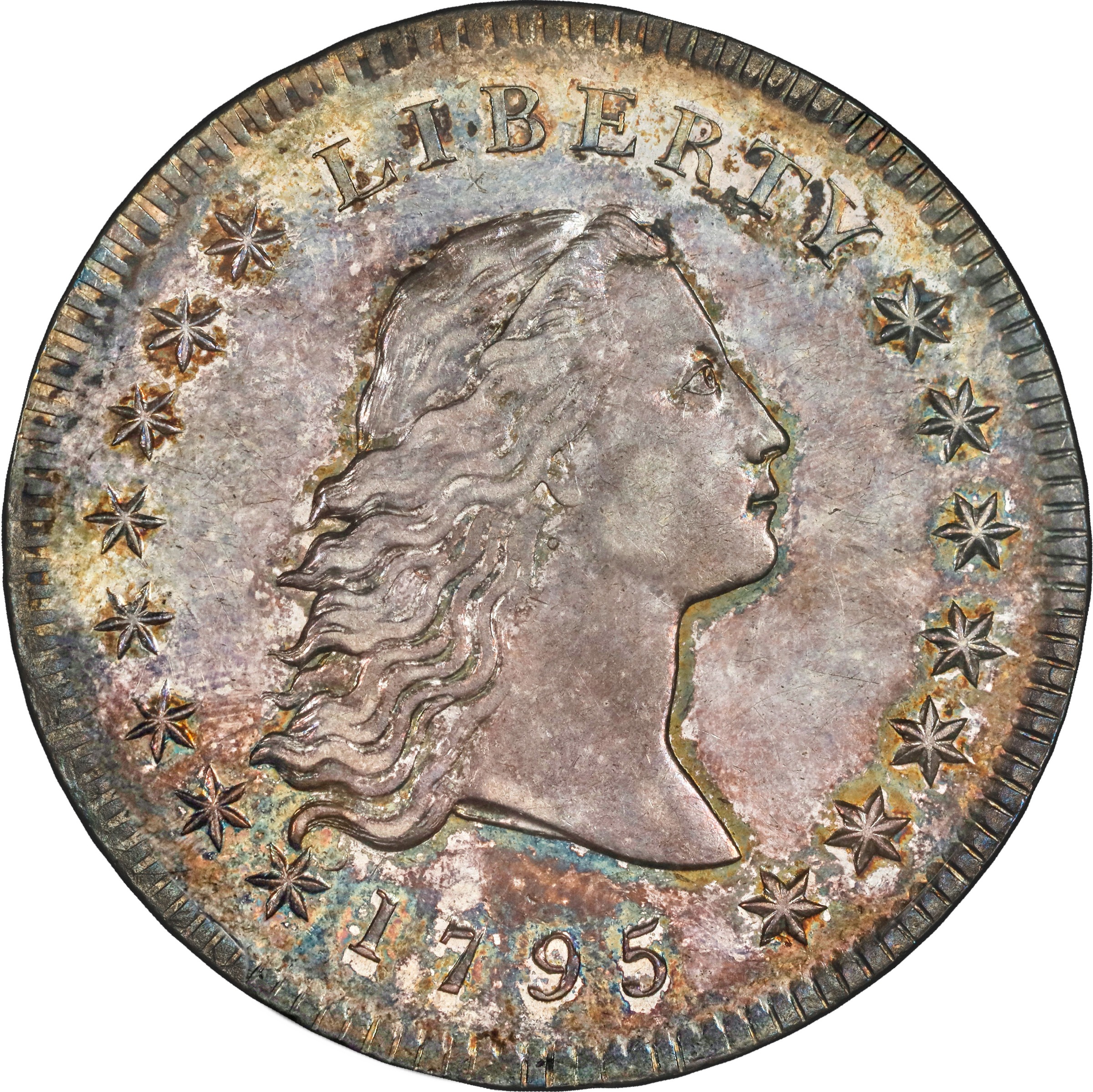
1795 $1 Flowing Hair, BB-20 MS (PCGS#39985)
Summer 2026 Global Showcase Auction U.S. Coins
- 競売業者
- Stack's Bowers
- ロット番号
- 2108
- グレード
- AU50+
- 価格
- 67,100
- ロット詳細
- BB Die State II. We last handled this breathtakingly beautiful coin in our (Bowers and Merena's) November 1988 sale of the celebrated Norweb Collection, in which it was described as:<p><em>A superb specimen in all respects, this coin displays an incredibly beautiful surface. Light golden toning blends to gunmetal blue at the borders, with areas of silver and gold in between. From an aesthetic viewpoint this is one of the very finest of the variety known to exist.</em><p>We add that the colors are most vivid and varied when observed with the aid of direct lighting, at which angles much pinkish-rose is also evident, especially on the reverse. Also, the strike detail remains universally sharp in the presence of light high point wear, and the mint finish is nearly complete with a stunning prooflike quality. A few faint adjustment marks in and around the central reverse are as made and not at all distracting.<p>As the flagship coin of the new nation, the silver dollar was intended to impress those who would use it, both domestically and abroad. Like the other silver denominations authorized by the Act of April 2, 1792, coinage of this denomination could not begin until the principle Mint officers could post the required bonds to handle precious metal deposits. The initial bond requirements were so steep - $10,000 each for Chief Coiner Henry Voigt and Assayer Albion Cox - that Congress was compelled to reduce them to a more manageable $5,000 for Voigt and $1,000 for Cox. As with the half dime and half dollar, very few silver dollars were struck in 1794, but this was to change in 1795. At least 10 Flowing Hair obverse dies and 11 Small Eagle reverse dies were prepared resulting in 19 varieties that have so far been cataloged. From the number of coins struck from these dies (your cataloger estimates it at 124,795 pieces), it is quite clear that after 1794 sufficient silver was deposited to allow mass production of this denomination. The coins either saw active commercial use (including in export trade to the West Indies, Europe, and the Far East) or served as bullion reserves for banks and brokers. By the early 19th century so many silver dollars were being lost to export, primarily to Asia, that President Thomas Jefferson was forced to suspend coinage of this denomination in 1804.<p>The average grade among survivors of all 1795 Flowing Hair dollar varieties is firmly in the VF range. Bowers-Borckardt 20, represented here, has an estimated population of 300 to 500 coins (per Bowers). There are even a number of Mint State coins known, with the present example in PCGS/CAC AU-50+ also perhaps deserving inclusion in Bowers' list of "Notable Specimens" due to both its stunning eye appeal and impressive numismatic provenance. It is more attractive than many early dollars in higher grade holders that we have handled in recent years, and we suspect that bidding activity will reflect this.