1849 $5 Norris, Gregg & Norris Plain Edge MS(PCGS#10279)
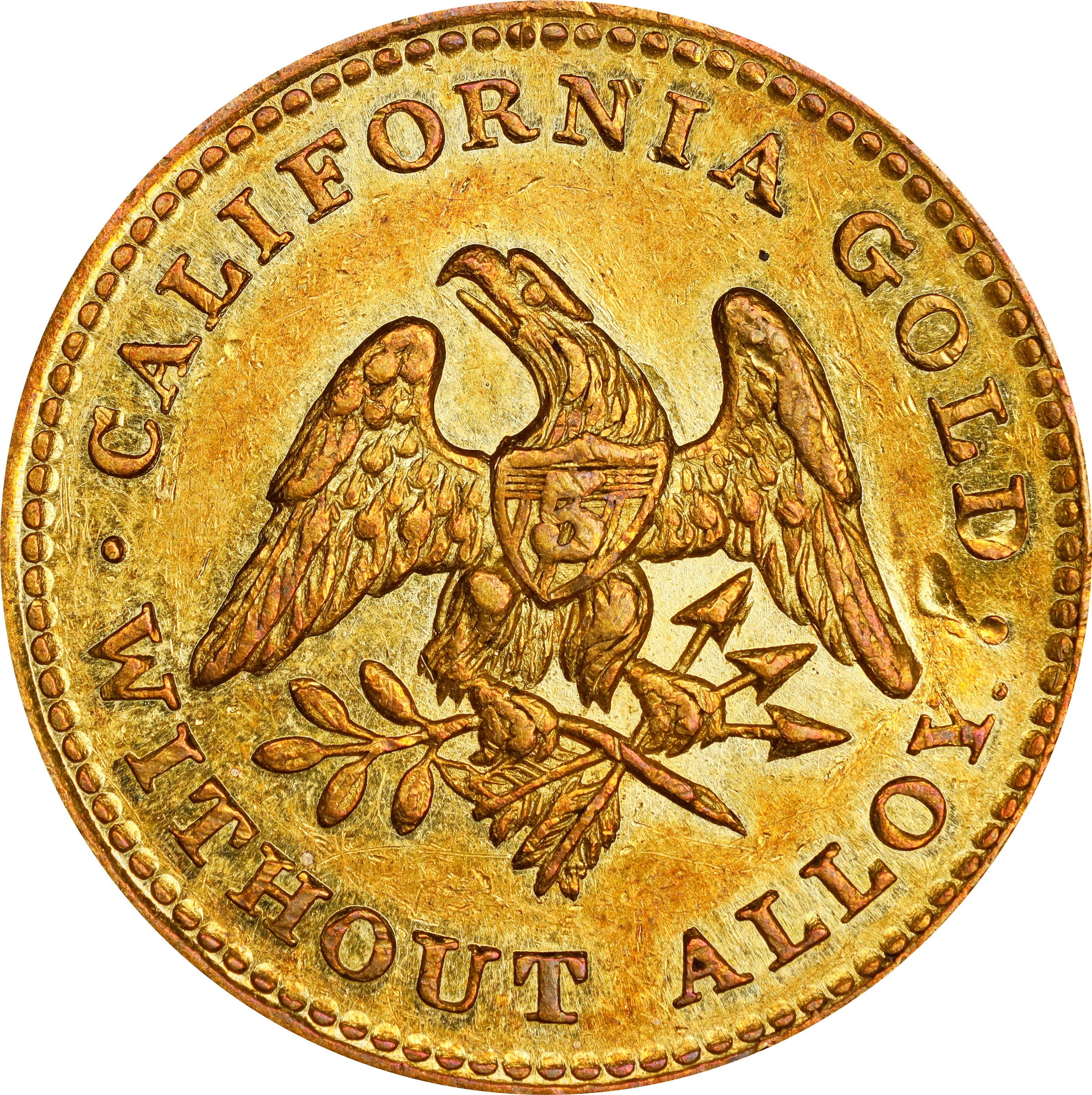
1849 $5 Norris, Gregg & Norris Plain Edge MS (PCGS#10279)
February 2026 Showcase Auction - The James A. Stack, Sr. Collection Part II
- Auctioneer
- Stack's Bowers
- Lot Number
- 23047
- Grade
- AU58
- Price
- 42,000
- Lot Description
- A simply spectacular example, last offered in B. Max Mehl's 1947 Frederick W. Geiss sale. Powerfully bright and reflective luster persists across both sides, with a decided greenish hue visible over the rich yellow and coppery rose surfaces. The darkest toning is seen at the central reverse, but the most lustrous areas flash with the appealing pale green that bespeaks originality. A little depression from a planchet flaw is seen at the wingtip adjacent to D of GOLD, another is visible above G of WEIGHT atop the reverse, affecting a few of the border beads above. The scattering of minor marks and unobtrusive hairlines expected of this grade are present, but only a thin horizontal scratch beneath the obverse olive sprig requires mention. This is a beautiful and choice survivor of this desirable issue, one of the earliest produced in the California Gold Rush era.<p><p>This was last cataloged for auction by B. Max Mehl almost 80 years ago, calling it "uncirculated with considerable original brilliant mint luster" and "quite a gem" while highlighting that "the figure 5 on obverse is bold, which is very unusual for this coin."<p>There are relatively few territorial gold issues dated the magic year of 1849. Historical evidence shows that the first of them to be struck in California was the half eagle issue of the firm Norris, Gregg, and Norris, who set up shop in Benicia to coin local gold as early as May 1849. Struck in substantial quantities, from dies the firm apparently brought with them from the East Coast, the Norris, Gregg, and Norris $5 coins were produced with both plain and reeded edges. Kagin and McCarthy argue that "it would be reasonable to conclude that the plain edge variety was struck first," making this coin a perfect representative of the very first type of gold coins ever struck in what became the state of California.